

(Because your life is not a Lifetime movie, and you deserve a peaceful one.)
Let me say this first: If you’re planning your exit, be safe. And if you’re reading this because someone you love is, you’re already being a safe person. That matters.
Fact: Domestic abuse occurs in the church at the same rate as outside of it, yet many pastors and leaders remain silent about it. This silence leaves victims feeling unseen and unsupported, while abusers often continue unchecked in the very place that should be safest.
For twelve years, I’ve ministered to women living in or leaving domestic abuse. I haven’t met a woman yet whose abuser didn’t place spyware on her computer and/or phone. Crisis resource and domestic abuse shelters say this isn’t a case of paranoia; it’s documented and disturbingly common. For this reason, use a computer at work or the library when you’re taking the Mosaic Threat Assessment and researching shelters, attorneys, or filing legal paperwork. On computers, internet usage can be monitored and is impossible to erase completely. If you’re concerned your internet usage might be monitored, remember to clear your browser history after visiting websites in general.
Purchase a burner phone for emotional support calls and safety planning purposes. Keep it hidden—at a friend’s house or at work. If you keep it with you, keep it locked and have a good reason for having it should the abuser find it (but I highly recommend against it). More Than a Phone partners with domestic violence programs across the country to provide free smartphones and data service to the survivors they support. It’s shocking how creative abusers become during post-separation/divorce abuse. Think you’ve seen it all? Think again.
10 Practical Safety Tips for Leaving an Abuser
1. Check for GPS tracking gadgets and AirTags.
They can be hidden in your car, purse, laptop bag, or even sewn into kids’ stuffed animals. Yep. That happened. Uninstall tracking apps or turn off GPS. Go to Settings > Privacy > Location Services and turn “Precise Location” OFF for any apps that don’t need it. And please—buy a burner phone today. You’ll need it.
2. Use a secure, court-admissible co-parenting app.
Talking Parents and OurFamilyWizard are top-tier. They keep communication on record and help curb the venom. Some apps offer timestamped messages and PDF exports for court use. Others include expense tracking, calendars, and file storage. If you need to present a timeline in court, this app is your new best friend—next to chocolate and people who believe you. (I suggest an app that doesn’t allow messages to be erased).
Additionally, 2Houses, CoParenter, Co-Parently, and Cozi are other good apps. Please review all of them to determine the most essential features for your situation. AppClose is entirely free with no subscription fees. Cozi is a free family organizer that can be used for scheduling and lists.
3. Change all smart home and shared tech access.
Update your router settings and unlink their access to smart devices, such as doorbells, security cameras, thermostats, blinds, garage keypads, smart fridges, pet food dispensers, and talking toilets—whatever is connected, disconnect them. Change the email address tied to your home systems and reset all devices. (Because nothing says “control freak” like your ex raising the heat to 90° while you sleep.) Also, be careful of hidden cameras, microphones, and Wi-Fi digital picture frames.
4. Replace keys with smart locks and rotating keypad codes.
Install a smart lock that lets you assign unique codes for each person. That way, if one gets compromised (hello, teenage oversharing), you can change it immediately. Never underestimate how quickly a house key can be copied while your child is visiting the other parent. Abusers collect access like squirrels collect acorns—sneaky and strategic. A young child will likely cave to the pressure of the manipulative, abusive parent and reveal the key code, so a smart lock can be reset daily or weekly for safety purposes.
5. Can’t afford a security system? DIY with jingle bells.
Go to Hobby Lobby or Michaels. Get 1–1.5 inch bells. Place one beside each window lock. Tie others on yarn and drape over doorknobs or sliding glass handles. If someone breaks in, you’ll hear it—plus your dog will think it’s Christmas. (Bonus: It saved me from middle of the night break-ins twice.)
6. Try loud, battery-powered door/window alarms.
Available for about $5-15 each on Amazon or at hardware stores. They’re not connected to your phone, but they scream loud enough to wake you, the cat, and possibly your ancestors. You don’t need smart tech to be smart.
7. Guard your pets like you guard your kids.
Only take them outside when you’re with them. Abusers have been known to steal, poison, or harm pets to control or punish survivors. If they eat something suspicious in the yard, check immediately. Change your vet, groomer, and pet daycare provider—especially if the abuser liked your dog more than you. (Not joking. That’s a red flag.)
8. Walk in pairs. Change your route.
Never walk alone if you can help it—especially if your dog is friendly toward the abuser. Find a new route, a safe time of day, and a buddy. Or better yet, walk with someone who has a large dog, a loud voice, and a black belt in “Try Me.” Keep in mind, abusers have been known to use or hire someone unknown to follow or harm the survivor.
9. Check your vehicle, purse, kid’s school back-packs, and diaper bags often.
AirTags and mini GPS devices can be slipped inside without you noticing. Check seams, zippers, compartments, and gloveboxes. If you get weird “unknown device” alerts on your phone, trust your gut. Apple even notifies iPhones if an AirTag not registered to you is following you.
10. Create backups of everything. Digitally and physically.
Store financial documents and evidence—texts, emails, photos, call logs—on an external hard drive. Print copies too. I’ve heard of abusers taking cash out of accounts in advance of a probable separation and of hiding money in secret investments. The victim then has to pay an attorney more fees to find the money. Keep documents with a trusted friend or family member. Think of it as your “just in case” folder. Family court doesn’t always believe victims, but evidence doesn’t lie. And you may need it sooner than you think. Also be aware that many abusers turn your family members, adult kids, parents, and siblings against you with deceit.
BONUS TIP: AirTags in shoes. Yes, really.
If you have a rational fear of the abusive parent harming or running off with your child, consider discreetly hiding an AirTag in their shoe. You can tuck one inside the tongue (then sew it shut) or purchase plain insoles with integrated AirTag holders (avoid any branding that might give it away). Another option? Make a slit in the sole of a flip-flop, insert the AirTag, and seal the outer portion of the slit with industrial-strength glue like E6000 or Loctite Shoe Glue. Don’t tell your child about it—kids talk, and the wrong person might overhear. This is one of those rare parenting moments where secret-keeping is safety, not sabotage.
This tip can also apply to you if you fear for your own safety. Most women who disappear do so at the hands of their intimate partner or ex. Whether it’s for your child or yourself, tracking technology can quietly buy you time, safety, and—Heaven forbid—proof.
Prepare to lose more than your marriage.
Leaving abuse isn’t just leaving the abuser. You may lose your church, job, friends, and community. Many abusers intentionally contact pastors, employers, and family to smear your reputation—often preemptively. They present as polished, concerned, and calm. You may come off as exhausted, emotional, and unstable. Why? Because you’ve been living in hell and they’ve been rehearsing for court.
He might lie to your boss, your grandma, your kid’s teacher—even your neighbor who still brings over fresh cookies. He’ll claim you’re unstable, you’re dangerous, and you’re the problem. And sadly, he’ll say it all with such conviction that people believe him.
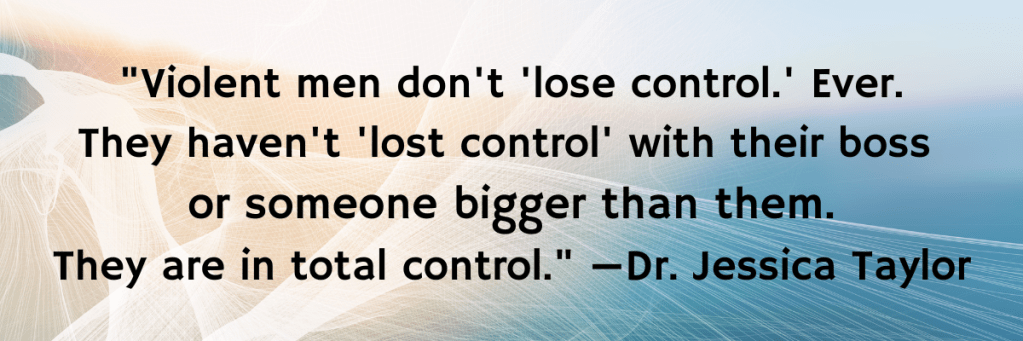
That’s how abusers work. They are not out of control—they’re in total control.
Don’t think that a divorce decree means the end of abusive control. The abuser’s behavior can escalate. And…if they show up unannounced at your door on a non-scheduled visitation day, they might not be there for a social call. I recommend not answering the door. Call the police to ensure your safety.
Final Notes (And a Book Giveaway)
The most violent men often have lower heart rates during an attack. They’re calmer when causing terror. They feel powerful, not panicked. And then? They act like the victim. (Oscar-worthy.)
Unfortunately, many family court systems and counselors don’t understand this level of manipulation and what it does to the body and mind. Instead of protecting survivors, they empower abusers, forcing victims into shared custody, mandated communication, and years of post-separation abuse.
That’s why I recommend The Body Keeps the Score by Bessel Van Der Kolk, M.D. It’s a must-read if you’ve lived through domestic abuse, secondary abuse by the family court system, and crazy making at its finest. Subscribe below to enter the giveaway. I’ll notify the winner Monday, 7/28/2025.
Until then, keep your head up, your locks changed, your bells tied, and your support system close.
You’re not alone, and you’re not crazy.
You’re brave.
You’re brilliant.
You’re breaking free.
Subscribe to enter the drawing for a paperback copy of The Body Keeps the Score: Brain, Mind, and Body in the Healing of Trauma (Enter ‘Book Giveaway’ for the message).


You’ll receive an email if you win. No spam. No guilt trips. No unexpected exes. Just support.


 Carolyn Deevers