When You Love Someone Who Keeps Hurting You
“She dresses herself with strength.” – Proverbs 31:17
I used to think time healed everything. But chronic stress has a way of stretching time thin, making it hard to recall what happened last week, let alone last year. If you’ve ever tried to piece together a conversation with someone toxic and found yourself second-guessing your own memory, you’re not crazy. You’re traumatized.
When you live with a difficult person, or worse, someone with an untreated personality disorder, your brain isn’t erasing the past. It’s protecting you from it.
That foggy feeling? That “I can’t even remember what we were fighting about” haze? It’s real. Trauma changes how we process time and memory. Under chronic stress, the hippocampus, the part of your brain responsible for memory and logic, can become weakened. Details fragment. Days blur. This is trauma, not forgetfulness.
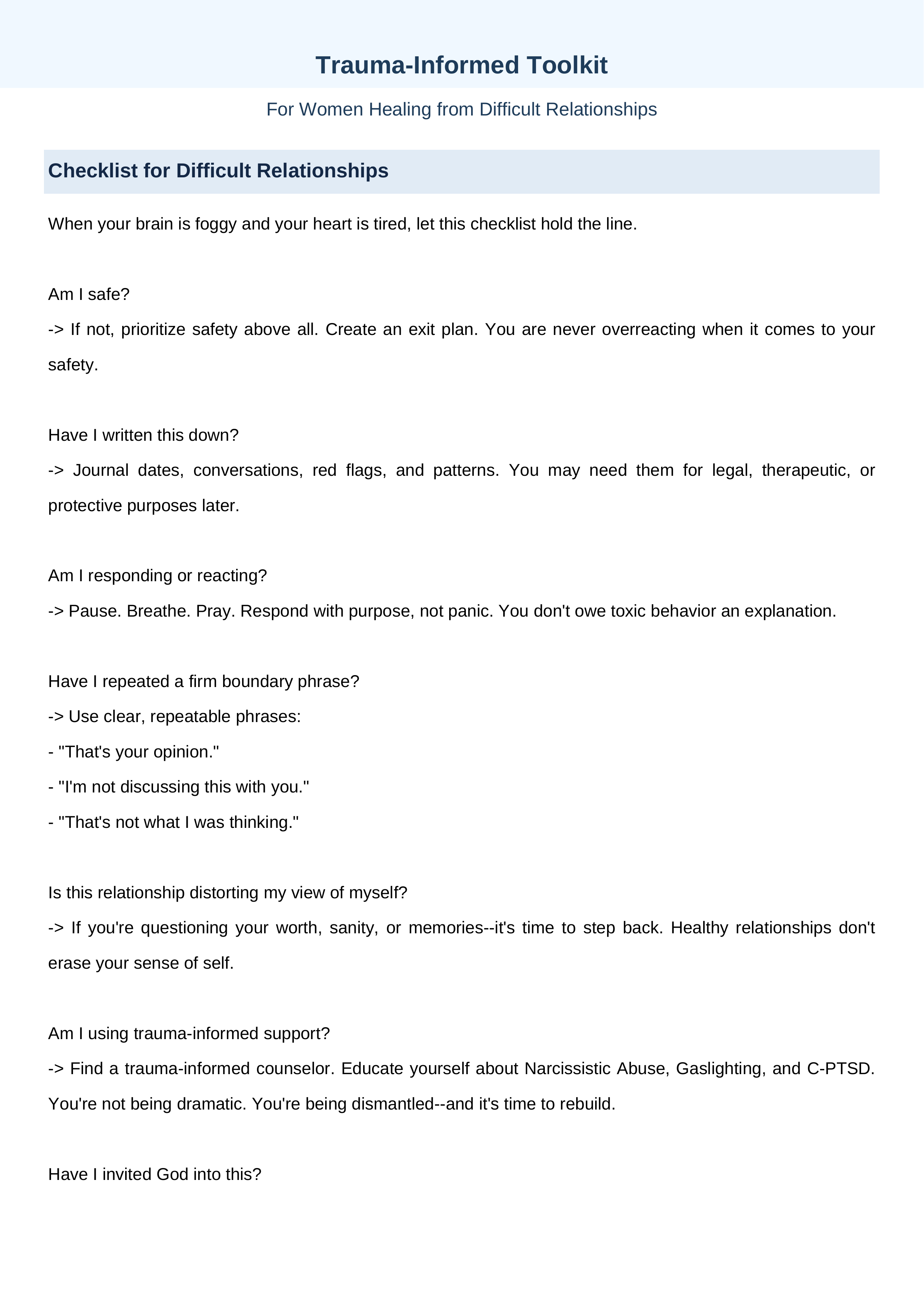
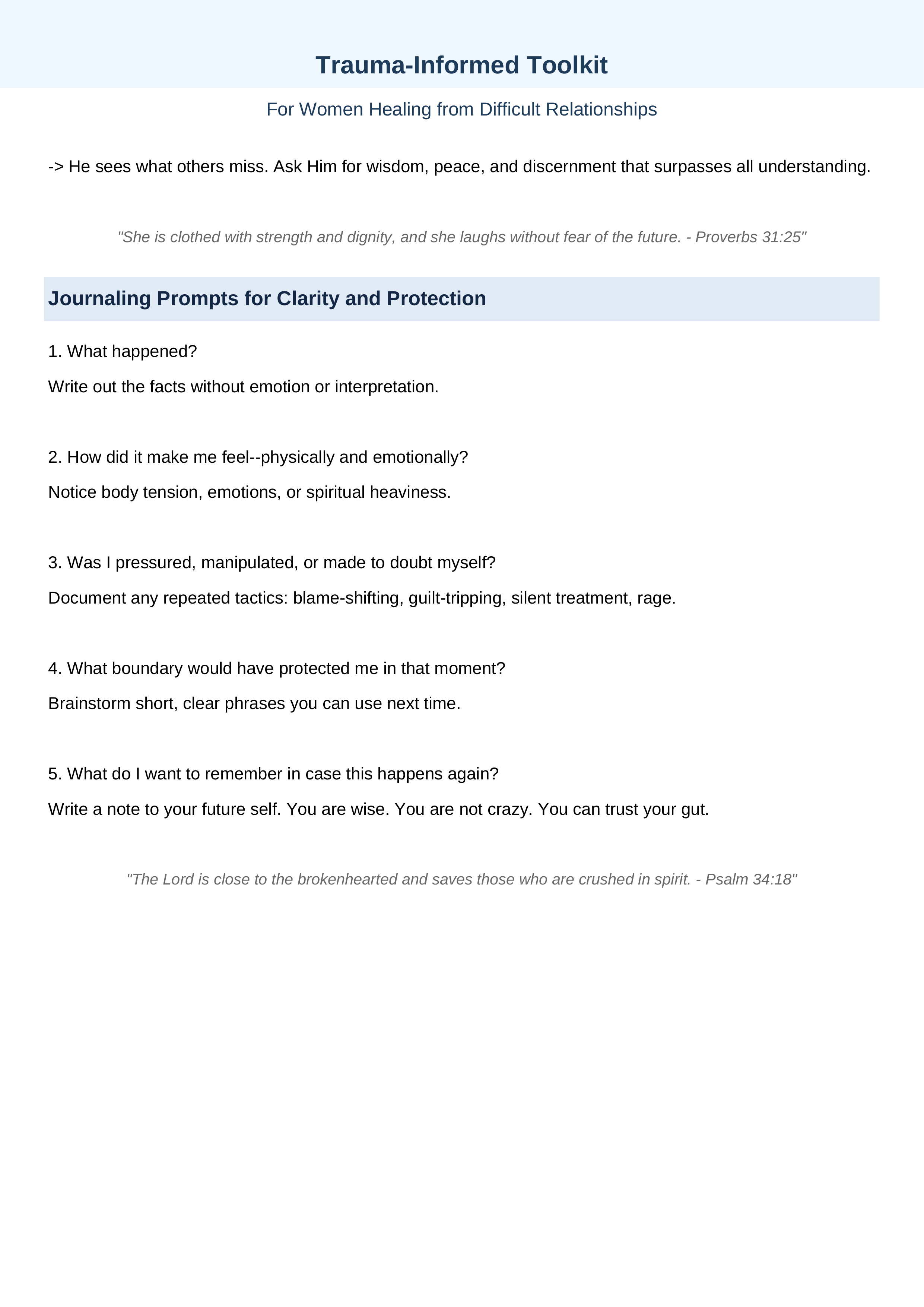
This is why journaling, even a few bullet points, is one of the most powerful tools you can use for healing and safety. One day, you may need those details to protect yourself or your children. You’re not documenting drama. You’re preserving truth.
• • •
If you’re in a relationship with someone who consistently destabilizes your peace, it’s possible you’re dealing with more than just a “difficult personality.” You might be facing a diagnosable condition, something with real consequences and patterns.
Here are four common ones many of my readers have lived with:
- Narcissistic Personality Disorder (NPD): marked by entitlement, lack of empathy, manipulation, and control. Learn more here.
- Borderline Personality Disorder (BPD): characterized by extreme emotional swings, fear of abandonment, and impulsive behaviors. Overview here.
- Bipolar Disorder: involves cycling between manic highs and depressive lows. It can be confusing and exhausting for everyone involved. More info here.
- Schizoaffective Disorder: a combination of schizophrenia symptoms and mood disorder episodes. Read more here.
Understanding what you’re up against helps you stop blaming yourself for things that are not your fault. It also helps you set boundaries—biblically, wisely, and firmly.
• • •
So let’s get practical. If you live with or love someone who:
- Asks the same question over and over, hoping you’ll change your answer,
- Rewrites history or twists your words,
- Demands agreement, and won’t rest until you say they’re right—
You may be under a psychological pressure campaign. It’s called gaslighting and coercive control, and it’s often subtle until you wake up one day and realize you’ve stopped trusting your own voice.
Repeat this phrase out loud:
“That’s your opinion.”
Not mean. Not reactive. Just a brick in the boundary wall.
It doesn’t matter if you’ve said it before. Say it again. And again. And again. Eventually, it becomes a verbal reminder that you are no longer available for emotional manipulation.
Or try this:
“I’m not discussing this with you.”
That’s it. Full stop. It’s not rude. It’s clear.
Another helpful response?
“That’s not what I was thinking.”
It breaks the control script that some toxic people use to dominate decisions that aren’t theirs to make.
These phrases aren’t magical. But used consistently, they help rewire your brain for truth and remind your nervous system what safety feels like.
• • •
A word of caution—if you are in danger, please don’t use confrontation as your go-to strategy. Exit safely. Quietly. Wisely. There are resources right here:
- National Domestic Violence Hotline
- DomesticShelters.org
- Mosaic Method Threat Assessment Systems
- Find a trauma-informed counselor near you
• • •
Living with someone with a personality disorder often means walking through a fog of confusion, shame, and spiritual exhaustion. They might act like the perfect spouse, parent, or friend in public. Narcissists, in particular, are often skilled performers who are charming on stage but controlling backstage.
They don’t just disagree with you. They disassemble you. And then they tell everyone how unstable you are.
You’re not crazy. You’re being worn down. And that “I can’t believe I didn’t see it sooner” shame spiral? Let it go. You see it now. That’s what matters.
• • •
Healing from trauma isn’t just about getting over the pain. It’s about getting under it and letting God meet you there.
When I was walking through some of my hardest relational storms, I didn’t always feel strong. But Scripture reminded me:
“She is clothed in strength and dignity, and she laughs at the days to come.” – Proverbs 31:25
I wasn’t laughing yet. But I was standing. And I was praying.
Make time for Jesus. Even if you don’t feel like it. Even if you’re numb. Just sit in His presence and let Him be the safe place your nervous system has been searching for.
I believe you will find as I have:
You will never regret the time you spend with God.
Not once have I said, “That was a waste.”
• • •
The truth is, most control-based personalities are fueled by fear and insecurity. That doesn’t excuse them; it explains their obsession with power. But now that you see it, you don’t have to bow to it. You can recognize it, name it, and walk around it.
Your “Aha!” moment will come. Mine did.
And when it does, you’ll finally understand why keeping a record of conversations, decisions, and incidents wasn’t paranoia; it was wisdom. Your brain wasn’t betraying you. It was buffering you.
You’re not weak for needing reminders.
You’re wise for learning how to write them down.
And you, dear one? You’re stronger than you know.
Keep showing up. Keep speaking truth.
And clothe yourself daily in the kind of strength that only heaven can tailor.
💛
FREE PRINTABLES: Trauma-Informed Checklist for Difficult Relationships AND Journaling Prompts for Clarity and Protection

 Carolyn Deevers